How to Run Facebook Ads: Beginner's Guide to Advertising on Facebook
Paid advertising on social media is an immediate way to boost the reach of your content — particularly when it comes to a power platform like Facebook.
With over 3 billion monthly active users, it's little wonder that Facebook is the most popular social media platform for running ads.
But the Facebook algorithm is a tough nut to crack, especially if you're just starting out — whether you're a small business owner, a creator, or a social media manager — so the smart way to build your target audience is to reach them with Facebook's advertising.
How to Run Facebook Ads: Beginner's Guide to Advertising on Facebook
Everything you need to know about Facebook Ads to get your campaigns up and running.

Senior Content Writer @ Buffer
Paid advertising on social media is an immediate way to boost the reach of your content — particularly when it comes to a power platform like Facebook.
With over 3 billion monthly active users, it's little wonder that Facebook is the most popular social media platform for running ads.
But the Facebook algorithm is a tough nut to crack, especially if you're just starting out — whether you're a small business owner, a creator, or a social media manager — so the smart way to build your target audience is to reach them with Facebook's advertising.
Try Buffer for free
180,000+ creators, small businesses, and marketers use Buffer to grow their audiences every month.
So, when it comes to social media strategy, understanding how to advertise on Facebook is a must.
What are the benefits of advertising on Facebook?
Accurately target customers
Facebook has a lot of user data and allows marketers to use it when targeting their audiences.
When creating a Facebook Ad, you can get specific with demographics about Facebook users like gender, location, and age. Where Facebook differentiates itself from other platforms with ads, though, is through lifestyle-based targeting options, like:
- Interests
- Behaviors (like recent purchases)
- Education and job history
- Income
- Political affiliation
- Major life events
- Spoken languages
If you're up for letting AI do all that for you, the 2023 release of Meta Advantage+ features will learn from your ad performance in real time. According to Meta, this will help to "maximize the performance benefits of AI in your ad campaigns and maximize the value of each ad impression."
Get powerful results
Learning how to run Facebook ads is easy once you've mastered Facebook Ads Manager — and results tend to happen quickly.
A recent survey of US retailers showed that 41 percent see the greatest return on advertising spend (ROAS) from Facebook Ads. That's huge compared to the average conversion rate across all industries of just 8.25 percent.
Reach billions on Facebook and Instagram
Because Meta owns both Facebook and Instagram, their platforms are easily integrated. This means that ads can be run simultaneously on both platforms, giving you access to even more social users — even if you aren't active on Instagram. The reach potential of advertising on Facebook and Instagram is unmatched.
Both marketing agencies (90 percent) and small businesses (85 percent) found Facebook newsfeed ads to be the most effective. However, Instagram Feed and Instagram Stories ranked #2 and #3 as the top-performing Meta channels for ads on this list.
Track ad performance in real-time
While Meta got rid of its full Facebook Analytics platform in 2021, it still has excellent resources for understanding ad performance, including reach, engagement, conversions, and more metrics. This data is updated in real-time so you can adjust your campaigns based on performance.
Another significant benefit of Facebook's current analytics is the ability to add the Meta Pixel to your website. Most content management platforms allow you to easily add this piece of code to your website and track the effectiveness of your Facebook Ads. You can monitor user behavior and create specific target audiences for future Facebook advertising campaigns.
Before you run Facebook Ads
Before you jump in, it's essential to think about why you're advertising and what you're aiming to achieve. By determining your measure of success ahead of going live with ads, you'll be able to decide which ad objective is best for your needs.
For example, if you want to increase your mobile app's downloads through Facebook Ads, your success metric could be 100 downloads in the first month. If it’s lead generation you’re after, success could be measured by a larger email list. You should think about your reason for advertising before you create a campaign.
How to advertise on Facebook
All of Facebook's ad campaigns run through the Facebook Ads Manager tool, so learning how to run ads on Facebook means getting to grips with it. Thankfully, it’s pretty easy to use. We’ll walk you through everything in this step-by-step guide to how to advertise on Facebook.
Getting started with Facebook Ads Manager
When you sign up for Facebook, you're given a personal ad account ID by default. You can see this ID by going to Ads Manager and looking in the upper left-hand corner.
To use Facebook Ads Manager, you need a verified payment method and:
- A Facebook Page or
- To be an admin, editor, or advertiser on someone else's Page
If you do not have a Page for your business, you can follow Facebook's steps to set one up. Any Page you create will be automatically given an ad account.
If there is a Page you wish to advertise for created by someone else, you need to ask the Page admin to assign you an admin, editor, or advertiser role on the Page.
If you already have an existing ad account for your Page but want to create a new one, you'll need a Business Manager account. You can create a new ad account once you sign up for Business Manager.
These steps are for using it on a desktop or laptop computer.
The easiest way to find Facebook Ads Manager is to click and bookmark this direct link. You will be brought directly into the Facebook Ads Manager for your personal ad account. If you manage multiple ad accounts, use the account drop-down menu to pick the right account.

To navigate to Ads Manager right from your business Page, head to the left sidebar and click on the Ad Center drop-down arrow of any Facebook Page, then choose All Ads from the drop-down. At the bottom of that Page is an option to click Ads Manager.
.png)
How to Run Facebook Ads: Beginner's Guide to Advertising on Facebook
Everything you need to know about Facebook Ads to get your campaigns up and running.
Senior Content Writer @ Buffer
Paid advertising on social media is an immediate way to boost the reach of your content — particularly when it comes to a power platform like Facebook.
With over 3 billion monthly active users, it's little wonder that Facebook is the most popular social media platform for running ads.
But the Facebook algorithm is a tough nut to crack, especially if you're just starting out — whether you're a small business owner, a creator, or a social media manager — so the smart way to build your target audience is to reach them with Facebook's advertising.
Try Buffer for free
180,000+ creators, small businesses, and marketers use Buffer to grow their audiences every month.
So, when it comes to social media strategy, understanding how to advertise on Facebook is a must.
What are the benefits of advertising on Facebook?
Accurately target customers
Facebook has a lot of user data and allows marketers to use it when targeting their audiences.
When creating a Facebook Ad, you can get specific with demographics about Facebook users like gender, location, and age. Where Facebook differentiates itself from other platforms with ads, though, is through lifestyle-based targeting options, like:
- Interests
- Behaviors (like recent purchases)
- Education and job history
- Income
- Political affiliation
- Major life events
- Spoken languages
If you're up for letting AI do all that for you, the 2023 release of Meta Advantage+ features will learn from your ad performance in real time. According to Meta, this will help to "maximize the performance benefits of AI in your ad campaigns and maximize the value of each ad impression."
Get powerful results
Learning how to run Facebook ads is easy once you've mastered Facebook Ads Manager — and results tend to happen quickly.
A recent survey of US retailers showed that 41 percent see the greatest return on advertising spend (ROAS) from Facebook Ads. That's huge compared to the average conversion rate across all industries of just 8.25 percent.
Reach billions on Facebook and Instagram
Because Meta owns both Facebook and Instagram, their platforms are easily integrated. This means that ads can be run simultaneously on both platforms, giving you access to even more social users — even if you aren't active on Instagram. The reach potential of advertising on Facebook and Instagram is unmatched.
Both marketing agencies (90 percent) and small businesses (85 percent) found Facebook newsfeed ads to be the most effective. However, Instagram Feed and Instagram Stories ranked #2 and #3 as the top-performing Meta channels for ads on this list.
Track ad performance in real-time
While Meta got rid of its full Facebook Analytics platform in 2021, it still has excellent resources for understanding ad performance, including reach, engagement, conversions, and more metrics. This data is updated in real-time so you can adjust your campaigns based on performance.
Another significant benefit of Facebook's current analytics is the ability to add the Meta Pixel to your website. Most content management platforms allow you to easily add this piece of code to your website and track the effectiveness of your Facebook Ads. You can monitor user behavior and create specific target audiences for future Facebook advertising campaigns.
Before you run Facebook Ads
Before you jump in, it's essential to think about why you're advertising and what you're aiming to achieve. By determining your measure of success ahead of going live with ads, you'll be able to decide which ad objective is best for your needs.
For example, if you want to increase your mobile app's downloads through Facebook Ads, your success metric could be 100 downloads in the first month. If it’s lead generation you’re after, success could be measured by a larger email list. You should think about your reason for advertising before you create a campaign.
How to advertise on Facebook
All of Facebook's ad campaigns run through the Facebook Ads Manager tool, so learning how to run ads on Facebook means getting to grips with it. Thankfully, it’s pretty easy to use. We’ll walk you through everything in this step-by-step guide to how to advertise on Facebook.
Getting started with Facebook Ads Manager
When you sign up for Facebook, you're given a personal ad account ID by default. You can see this ID by going to Ads Manager and looking in the upper left-hand corner.
To use Facebook Ads Manager, you need a verified payment method and:
- A Facebook Page or
- To be an admin, editor, or advertiser on someone else's Page
If you do not have a Page for your business, you can follow Facebook's steps to set one up. Any Page you create will be automatically given an ad account.
If there is a Page you wish to advertise for created by someone else, you need to ask the Page admin to assign you an admin, editor, or advertiser role on the Page.
If you already have an existing ad account for your Page but want to create a new one, you'll need a Business Manager account. You can create a new ad account once you sign up for Business Manager.
These steps are for using it on a desktop or laptop computer.
The easiest way to find Facebook Ads Manager is to click and bookmark this direct link. You will be brought directly into the Facebook Ads Manager for your personal ad account. If you manage multiple ad accounts, use the account drop-down menu to pick the right account.
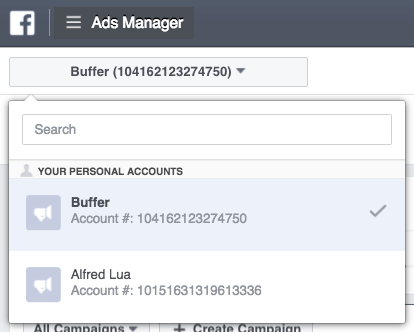
To navigate to Ads Manager right from your business Page, head to the left sidebar and click on the Ad Center drop-down arrow of any Facebook Page, then choose All Ads from the drop-down. At the bottom of that Page is an option to click Ads Manager.
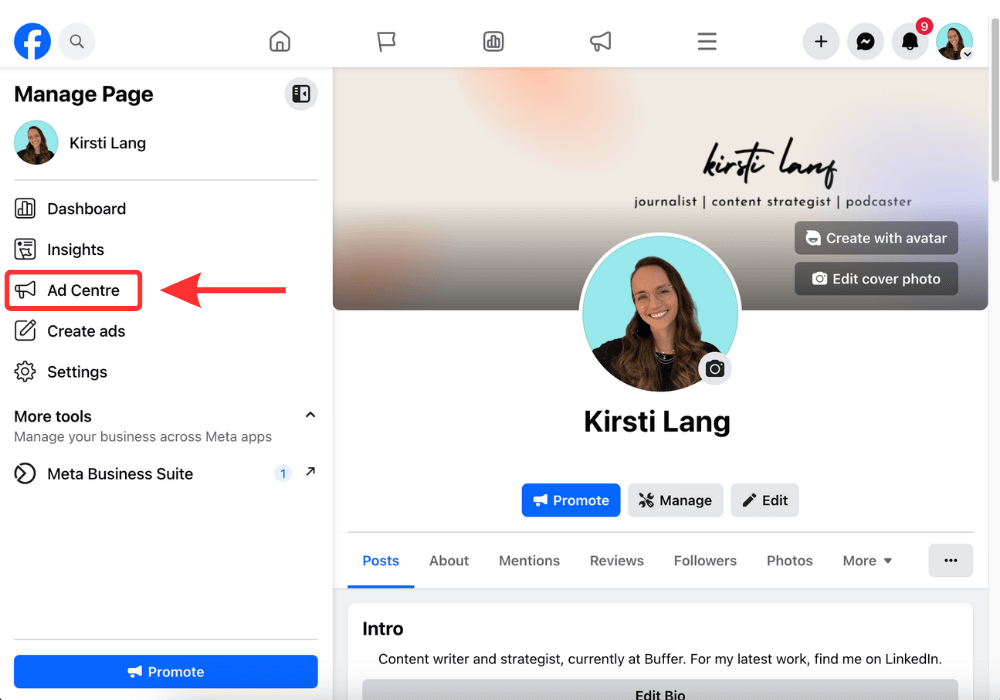
Click on Facebook's Ads Manager to get started. You will be brought to your Facebook Ad Accounts page, where there will be a quick overview of your ad account(s). If you have access to more than one ad account, select the account where you wish to run ads.
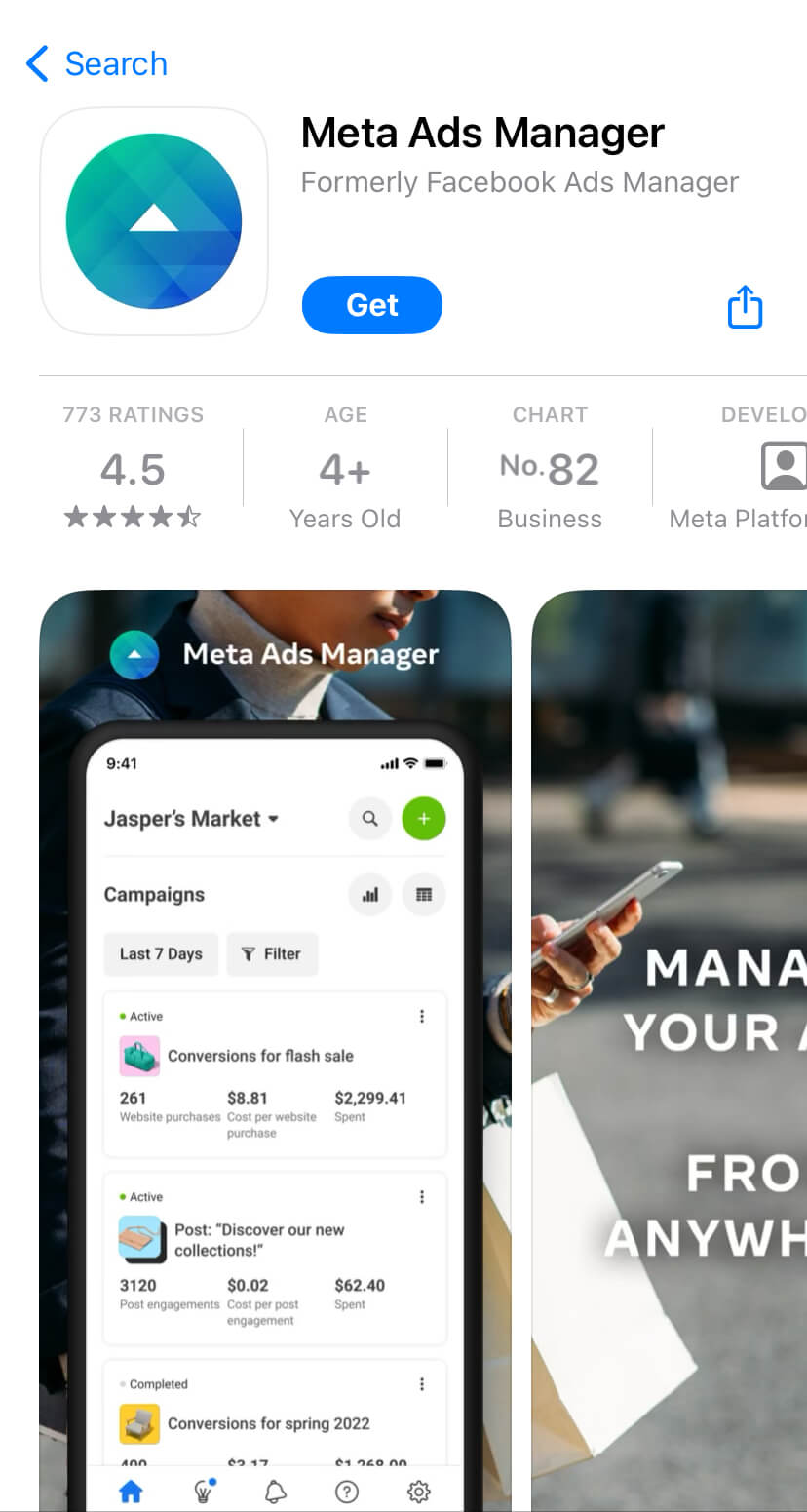
If you'd rather use a mobile device, a Facebook Ads Manager app is available for Apple and Android.

How to create a Facebook ad
Here's a complete, step-by-step guide to advertising on Facebook with the latest version of Facebook Ads Manager.
1. Create Ad
Click the green Create Ad button to get started with your first ad.
.png)
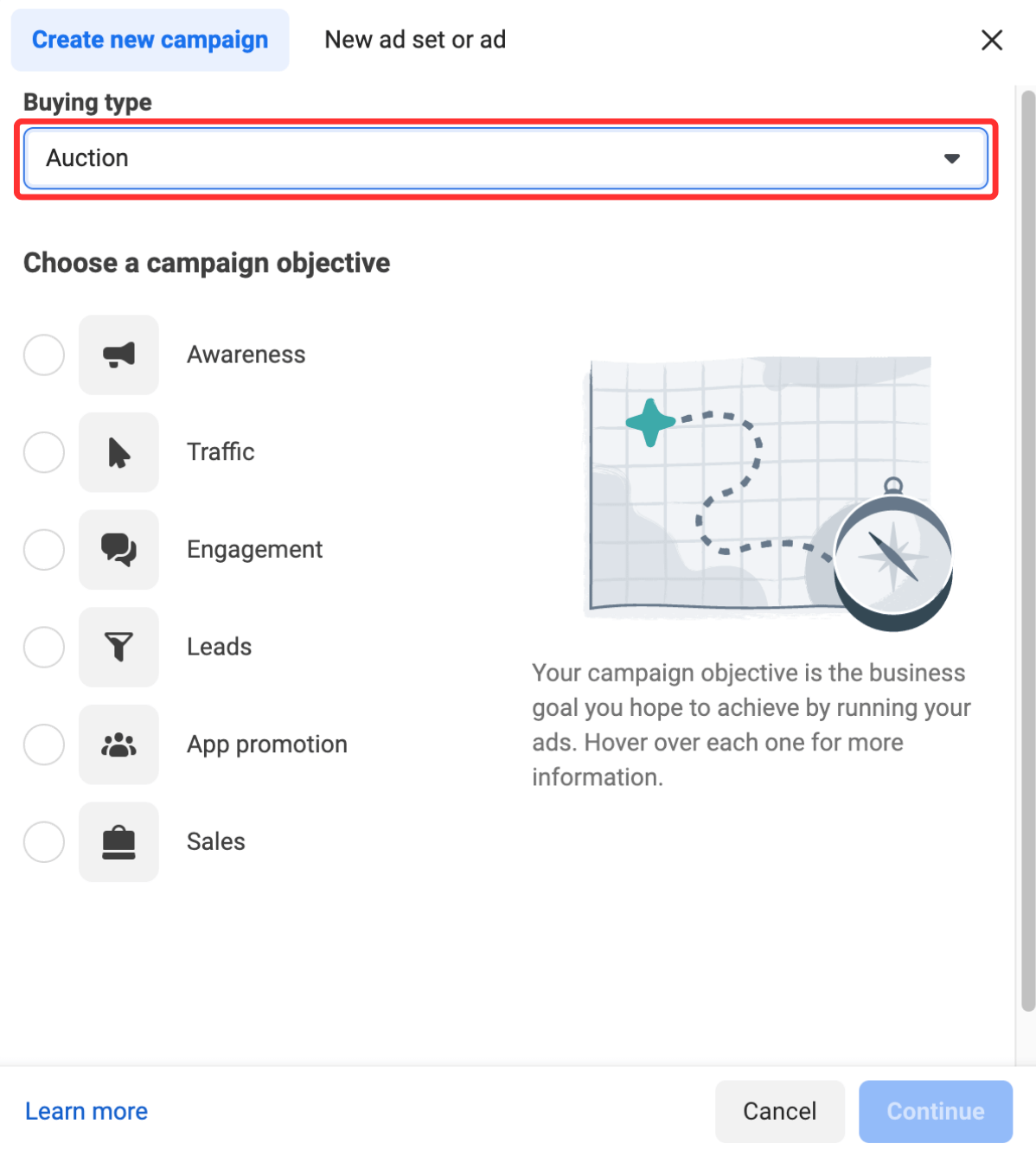
Facebook will take you to a page where you will be prompted to choose a buying type and campaign objective.
2. Choose your buying type
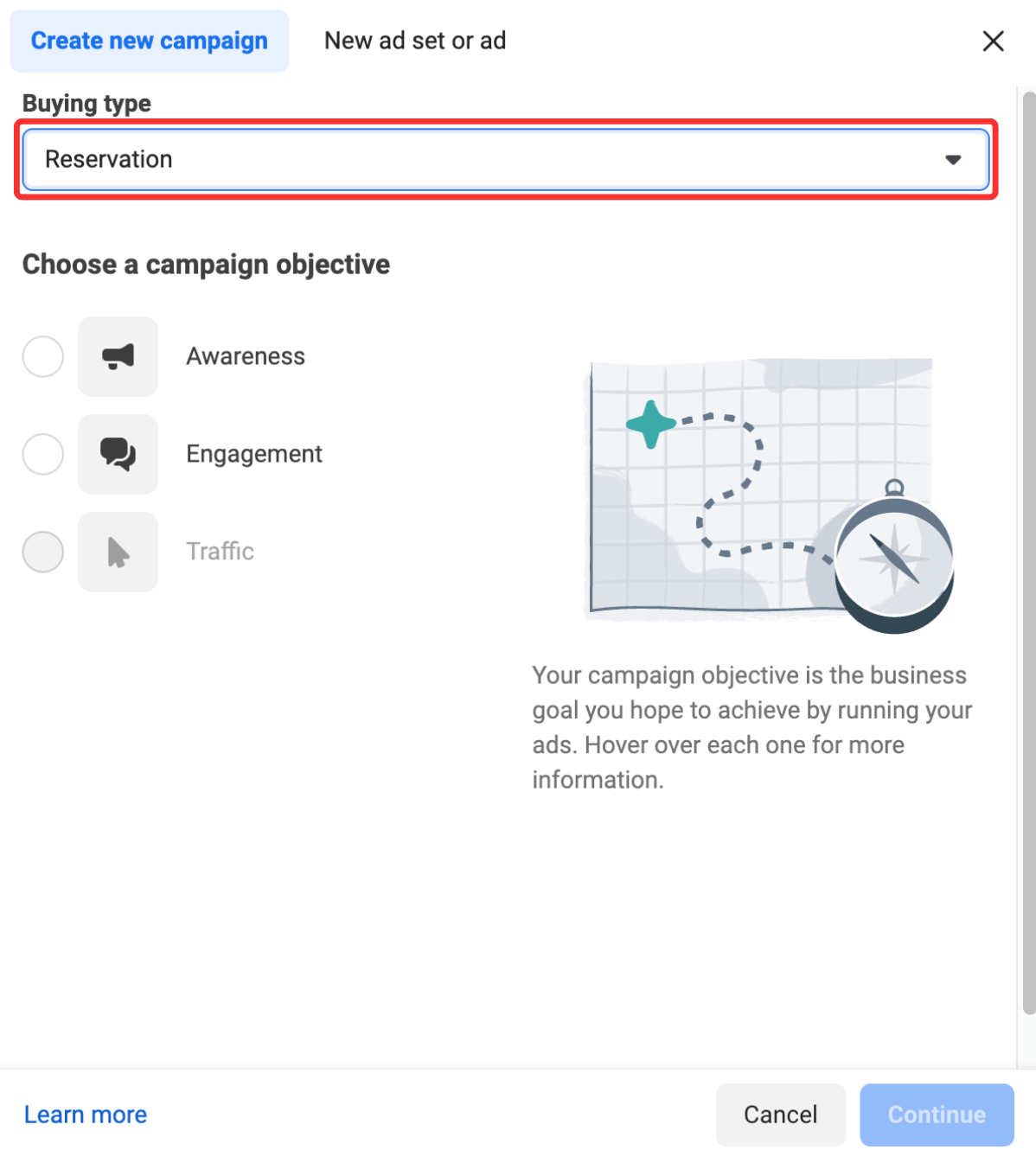
Meta's ads have two different buying types: Auction and Reservation (formerly Reach and Frequency). Here's Meta's explainer for both:
Auction: Offers more choice, efficiency, and flexibility, with less predictable results. Ads can be placed across Facebook, Messenger, Instagram, and Meta Audience Network.
Reservation: Lets you plan and buy your campaigns in advance, with predictable performance goals and more control over your frequency controls. Ads can be placed on Facebook and Instagram.
The key differences between the two lie in your campaign setup and campaign objectives. For example, an Auction ad allows for various campaign objectives, while Reservation only has two: awareness and engagement.
It's worthwhile reading over Meta's guidance on which option best suits your needs here.
.png)
How to Run Facebook Ads: Beginner's Guide to Advertising on Facebook
Everything you need to know about Facebook Ads to get your campaigns up and running.
Senior Content Writer @ Buffer
Paid advertising on social media is an immediate way to boost the reach of your content — particularly when it comes to a power platform like Facebook.
With over 3 billion monthly active users, it's little wonder that Facebook is the most popular social media platform for running ads.
But the Facebook algorithm is a tough nut to crack, especially if you're just starting out — whether you're a small business owner, a creator, or a social media manager — so the smart way to build your target audience is to reach them with Facebook's advertising.
Try Buffer for free
180,000+ creators, small businesses, and marketers use Buffer to grow their audiences every month.
So, when it comes to social media strategy, understanding how to advertise on Facebook is a must.
What are the benefits of advertising on Facebook?
Accurately target customers
Facebook has a lot of user data and allows marketers to use it when targeting their audiences.
When creating a Facebook Ad, you can get specific with demographics about Facebook users like gender, location, and age. Where Facebook differentiates itself from other platforms with ads, though, is through lifestyle-based targeting options, like:
- Interests
- Behaviors (like recent purchases)
- Education and job history
- Income
- Political affiliation
- Major life events
- Spoken languages
If you're up for letting AI do all that for you, the 2023 release of Meta Advantage+ features will learn from your ad performance in real time. According to Meta, this will help to "maximize the performance benefits of AI in your ad campaigns and maximize the value of each ad impression."
Get powerful results
Learning how to run Facebook ads is easy once you've mastered Facebook Ads Manager — and results tend to happen quickly.
A recent survey of US retailers showed that 41 percent see the greatest return on advertising spend (ROAS) from Facebook Ads. That's huge compared to the average conversion rate across all industries of just 8.25 percent.
Reach billions on Facebook and Instagram
Because Meta owns both Facebook and Instagram, their platforms are easily integrated. This means that ads can be run simultaneously on both platforms, giving you access to even more social users — even if you aren't active on Instagram. The reach potential of advertising on Facebook and Instagram is unmatched.
Both marketing agencies (90 percent) and small businesses (85 percent) found Facebook newsfeed ads to be the most effective. However, Instagram Feed and Instagram Stories ranked #2 and #3 as the top-performing Meta channels for ads on this list.
Track ad performance in real-time
While Meta got rid of its full Facebook Analytics platform in 2021, it still has excellent resources for understanding ad performance, including reach, engagement, conversions, and more metrics. This data is updated in real-time so you can adjust your campaigns based on performance.
Another significant benefit of Facebook's current analytics is the ability to add the Meta Pixel to your website. Most content management platforms allow you to easily add this piece of code to your website and track the effectiveness of your Facebook Ads. You can monitor user behavior and create specific target audiences for future Facebook advertising campaigns.
Before you run Facebook Ads
Before you jump in, it's essential to think about why you're advertising and what you're aiming to achieve. By determining your measure of success ahead of going live with ads, you'll be able to decide which ad objective is best for your needs.
For example, if you want to increase your mobile app's downloads through Facebook Ads, your success metric could be 100 downloads in the first month. If it’s lead generation you’re after, success could be measured by a larger email list. You should think about your reason for advertising before you create a campaign.
How to advertise on Facebook
All of Facebook's ad campaigns run through the Facebook Ads Manager tool, so learning how to run ads on Facebook means getting to grips with it. Thankfully, it’s pretty easy to use. We’ll walk you through everything in this step-by-step guide to how to advertise on Facebook.
Getting started with Facebook Ads Manager
When you sign up for Facebook, you're given a personal ad account ID by default. You can see this ID by going to Ads Manager and looking in the upper left-hand corner.
To use Facebook Ads Manager, you need a verified payment method and:
- A Facebook Page or
- To be an admin, editor, or advertiser on someone else's Page
If you do not have a Page for your business, you can follow Facebook's steps to set one up. Any Page you create will be automatically given an ad account.
If there is a Page you wish to advertise for created by someone else, you need to ask the Page admin to assign you an admin, editor, or advertiser role on the Page.
If you already have an existing ad account for your Page but want to create a new one, you'll need a Business Manager account. You can create a new ad account once you sign up for Business Manager.
These steps are for using it on a desktop or laptop computer.
The easiest way to find Facebook Ads Manager is to click and bookmark this direct link. You will be brought directly into the Facebook Ads Manager for your personal ad account. If you manage multiple ad accounts, use the account drop-down menu to pick the right account.
To navigate to Ads Manager right from your business Page, head to the left sidebar and click on the Ad Center drop-down arrow of any Facebook Page, then choose All Ads from the drop-down. At the bottom of that Page is an option to click Ads Manager.
Click on Facebook's Ads Manager to get started. You will be brought to your Facebook Ad Accounts page, where there will be a quick overview of your ad account(s). If you have access to more than one ad account, select the account where you wish to run ads.
If you'd rather use a mobile device, a Facebook Ads Manager app is available for Apple and Android.
How to create a Facebook ad
Here's a complete, step-by-step guide to advertising on Facebook with the latest version of Facebook Ads Manager.
1. Create Ad
Click the green Create Ad button to get started with your first ad.
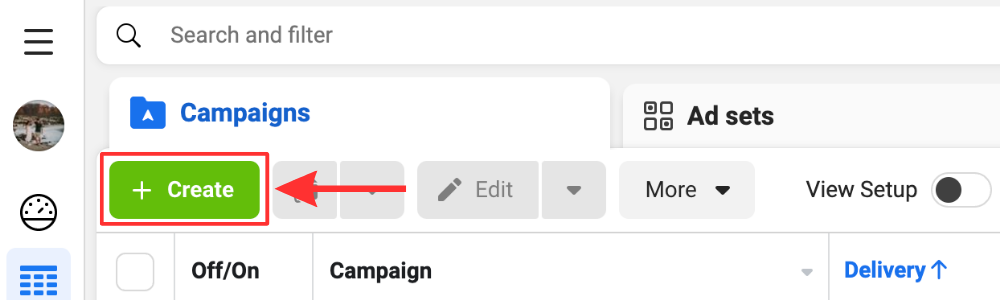
Facebook will take you to a page where you will be prompted to choose a buying type and campaign objective.
2. Choose your buying type
Meta's ads have two different buying types: Auction and Reservation (formerly Reach and Frequency). Here's Meta's explainer for both:
Auction: Offers more choice, efficiency, and flexibility, with less predictable results. Ads can be placed across Facebook, Messenger, Instagram, and Meta Audience Network.
Reservation: Lets you plan and buy your campaigns in advance, with predictable performance goals and more control over your frequency controls. Ads can be placed on Facebook and Instagram.
The key differences between the two lie in your campaign setup and campaign objectives. For example, an Auction ad allows for various campaign objectives, while Reservation only has two: awareness and engagement.
It's worthwhile reading over Meta's guidance on which option best suits your needs here.
3. Choose your campaign objective
Meta and Facebook let you set up your ads with your ultimate goal in mind. There are six you can choose from:
- Awareness: Your ad will be shown to people most likely to remember them. According to Meta, this goal type is good for reach, brand awareness, video views, and store location awareness.
- Traffic: This ad type will send people to a specific destination, like your website, an event, or a download link. It's best for link clicks, landing page views, and calls.
- Engagement: This ad type will make you more likely to receive messages, in-app purchases, likes, and comments. It's also great for video views, conversions, and calls.
- Leads: Your ad may help you collect info from potential customers. It's good for forms, conversions, and calls.
- App promotion: Get more users for your app or encourage current users to keep using it.
- Sales: Find people who are likely to buy your product or service. This route is obviously great for conversions and in-app sales.
4. Pick a name for your ad campaign
.png)
Once you've selected your marketing objective, you'll be asked to name your campaign. Be sure to make your campaign name recognizable to everyone working on the ads.
5. Declare your ad categoryDifferent regions have different advertising rules, particularly when it comes to categories like credit, employment, housing, social issues, elections, or politics. If your ad falls into one of these buckets, it's worthwhile declaring it here to ensure it remains compliant with Facebook's and various countries' advertising standards.

Different regions have different advertising rules, particularly when it comes to categories like credit, employment, housing, social issues, elections, or politics. If your ad falls into one of these buckets, it's worthwhile declaring it here to ensure it remains compliant with Facebook's and various countries' advertising standards.
6. Choose whether you want A/B testing on.png) At this point in the process, you'll be able to turn on the A/B test feature, where you can try out different images, text, audiences, or placements to maximize your ad performance. The full setup for this will come later in the process — this toggle just turns it on.
At this point in the process, you'll be able to turn on the A/B test feature, where you can try out different images, text, audiences, or placements to maximize your ad performance. The full setup for this will come later in the process — this toggle just turns it on.
.png)
IN URDU AND HINDI 👆
IN ENGLISH 👆


.png)
No comments:
Post a Comment